Spring AOP 实例
pom.xml 配置
<properties>
    <project.build.sourceEncoding>UTF-8</project.build.sourceEncoding>
    <project.reporting.outputEncoding>UTF-8</project.reporting.outputEncoding>
</properties>

<parent>
    <groupId>org.springframework.boot</groupId>
    <artifactId>spring-boot-starter-parent</artifactId>
    <version>1.5.4.RELEASE</version>
    <relativePath/> <!-- lookup parent from repository -->
</parent>

<dependencies>
    <dependency>
        <groupId>org.springframework.boot</groupId>
        <artifactId>spring-boot-starter-aop</artifactId>
    </dependency>

    <dependency>
        <groupId>org.springframework.boot</groupId>
        <artifactId>spring-boot-starter-web</artifactId>
    </dependency>

    <dependency>
        <groupId>org.springframework.boot</groupId>
        <artifactId>spring-boot-starter-test</artifactId>
        <scope>test</scope>
    </dependency>
</dependencies>
HTTP 接口鉴权
需求: 需要提供的 HTTP RESTful 服务,服务会提供一些比较敏感的信息,因此对于某些接口的调用会进行调用方权限的校验,而某些不太敏感的接口则不设置权限,或所需要的权限比较低(例如某些监控接口,服务状态接口等)。 实现需求的方法有很多,例如我们可以在每个 HTTP 接口方法中对服务请求的调用方进行权限的检查,当调用方权限不符时,方法返回错误。当然这样做并无不可,不过如果我们的 api 接口很多,每个接口都进行这样的判断,无疑有很多冗余的代码, 并且很有可能有某个粗心的家伙忘记了对调用者的权限进行验证,这样就会造成潜在的 bug。
提炼一下需求:
- 可以定制地为某些指定的 HTTP RESTful api 提供权限验证功能。
- 当调用方的权限不符时, 返回错误。
根据上面所提出的需求, 我们可以进行如下设计:
- 提供一个特殊的注解
AuthChecker, 这个是一个方法注解, 有此注解所标注的 Controller 需要进行调用方权限的认证。 - 利用 Spring AOP, 以
@annotation切点标志符来匹配有注解AuthChecker所标注的 joinpoint。在 advice 中, 简单地检查调用者请求中的 Cookie 中是否有我们指定的 token, 如果有, 则认为此调用者权限合法, 允许调用, 反之权限不合法,返回错误。
源码:
AuthChecker.java
@Target(ElementType.METHOD)
@Retention(RetentionPolicy.RUNTIME)
public @interface AuthChecker {
}
HttpAopAdvice.java
import org.aspectj.lang.ProceedingJoinPoint;
import org.aspectj.lang.annotation.Around;
import org.aspectj.lang.annotation.Aspect;
import org.aspectj.lang.annotation.Pointcut;
import org.springframework.stereotype.Component;

import javax.servlet.http.Cookie;
import javax.servlet.http.HttpServletRequest;
import org.springframework.web.context.request.RequestContextHolder;
import org.springframework.web.context.request.ServletRequestAttributes;

@Component
@Aspect
public class HttpAopAdvice {
    @Pointcut("@annotation(me.ilcb.aop.authentication.AuthChecker)")
    public void pointcut() {}

    @Around("pointcut()")
    public Object checkAuth(ProceedingJoinPoint proceedingJoinPoint) throws Throwable {
        HttpServletRequest request =((ServletRequestAttributes)RequestContextHolder.getRequestAttributes()).getRequest();

        // 检查用户的token是否合法
        String token = getUserToken(request);
        if (!token.equalsIgnoreCase("123456")) {
            return "错误,权限不合法! ";
        }
        return proceedingJoinPoint.proceed();
    }

    private String getUserToken(HttpServletRequest request) {
        Cookie[] cookies = request.getCookies();
        if (cookies == null) {
            return "";
        }

        for (Cookie cookie : cookies) {
            if (cookie.getName().equalsIgnoreCase("user_token")) {
                return cookie.getValue();
            }
        }
        return "";
    }
}
当被 AuthChecker 注解所标注的方法调用前,会执行我们的这个 advice,而这个 advice 的处理逻辑很简单,即从 HTTP 请求中获取名为user_token的 cookie 的值,如果它的值是123456,则我们认为此 HTTP 请求合法,
进而调用proceedingJoinPoint.proceed()将 HTTP 请求转交给相应的控制器处理;而如果user_tokencookie 的值不是123456,或为空,则认为此 HTTP 请求非法,返回错误。
AuthController.java(HTTP 接口)
import org.springframework.web.bind.annotation.RequestMapping;
import org.springframework.web.bind.annotation.ResponseBody;
import org.springframework.web.bind.annotation.RestController;

@RestController
public class AuthController {
    @RequestMapping("/aop/http/alive")
    public @ResponseBody String alive() {
        return "ok";
    }

    @AuthChecker
    @RequestMapping("/aop/http/user_info")
    public @ResponseBody String callInterface() {
        return "invoke user_info interface";
    }

    @RequestMapping("/hello")
    public @ResponseBody String hello() {
        return "hello";
    }
}
App.java
import org.springframework.boot.SpringApplication;
import org.springframework.boot.autoconfigure.SpringBootApplication;
import org.springframework.context.annotation.EnableAspectJAutoProxy;

@EnableAspectJAutoProxy
@SpringBootApplication
public class App {
    public static void main(String[] args) {
        SpringApplication.run(App.class, args);
    }
}
启动服务,验证下服务是否有效:
首先在 Advanced rest client 中,调用 /aop/http/alive 接口,请求头中不加任何参数:
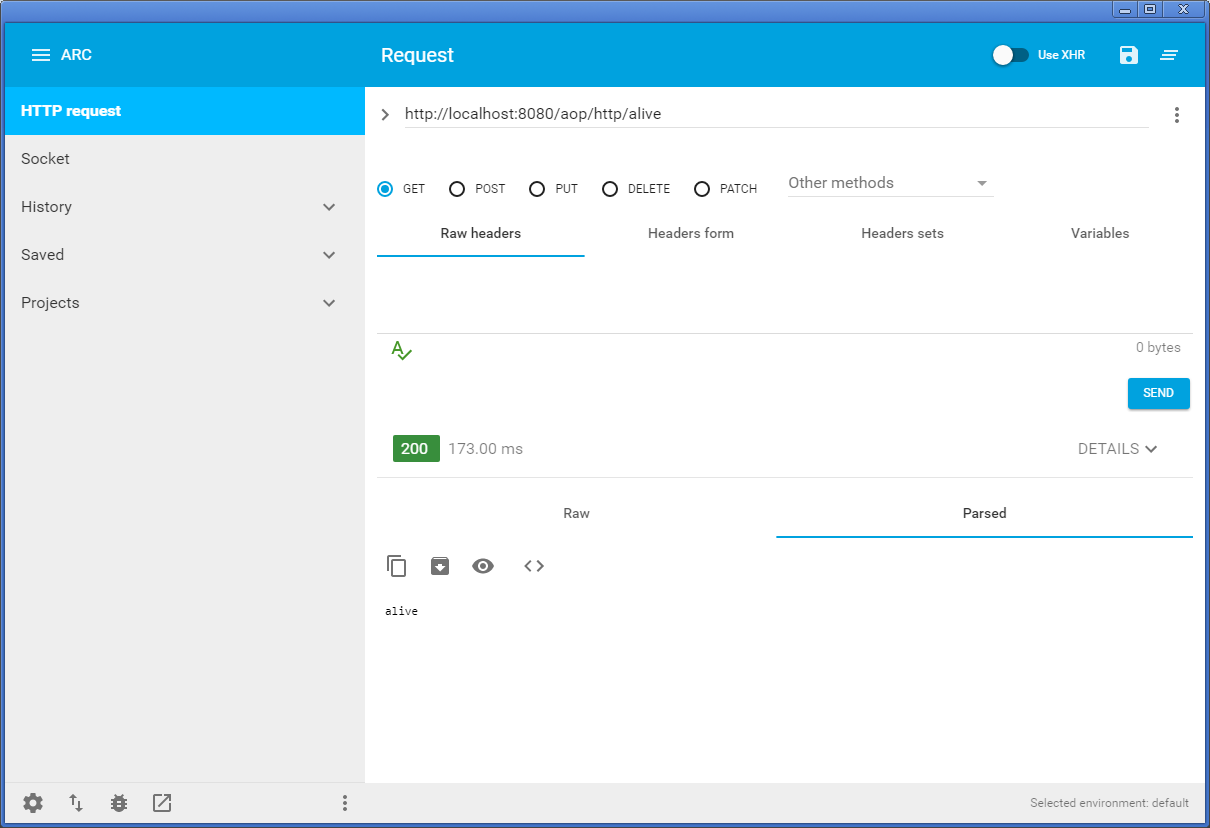 请求 /aop/http/user_info 接口:
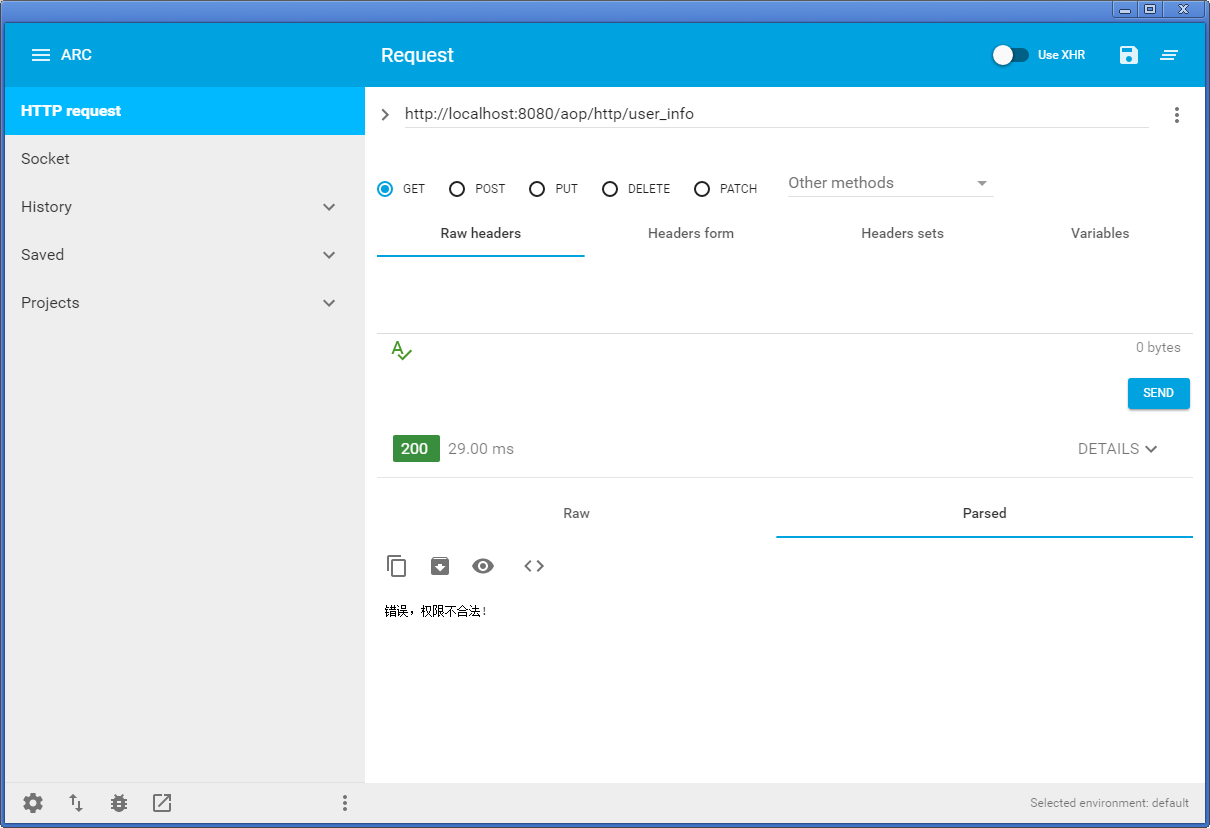 请求 /aop/http/user_info 接口时,服务返回一个权限异常的错误,为什么会这样呢?
自然就是我们的权限认证系统起了作用:当一个方法被调用并且这个方法有
AuthChecker 注解时,那么首先会执行到我们的around advice,在这个 advice 中会校验 HTTP 请求的 cookie 字段中是否有携带user_token字段,
如果没有,则返回权限错误。
那么为了能够正常地调用 /aop/http/user_info 接口,我们可以在 Cookie 中添加 user_token=123456;
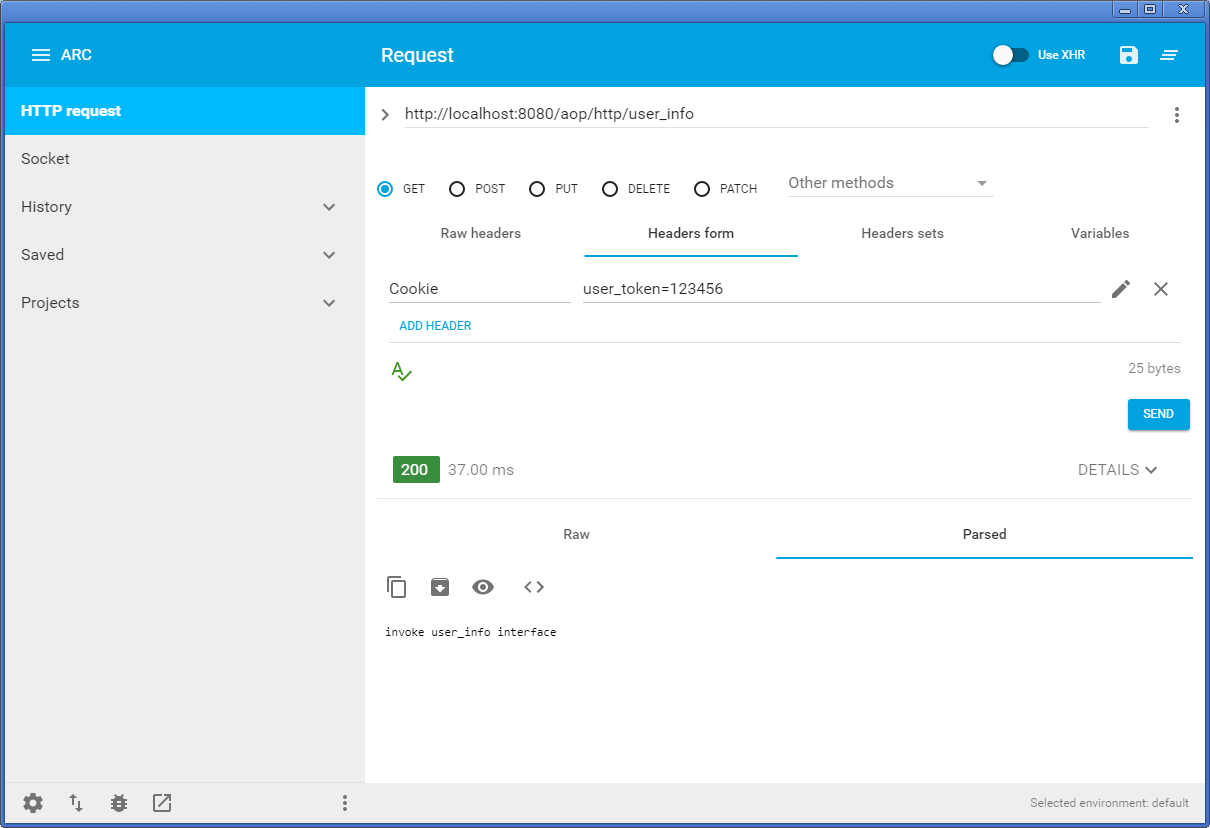
方法调用日志
需求:
- 某个服务下的方法的调用需要有 log:记录调用的参数以及返回结果。
- 当方法调用出异常时, 有特殊处理, 例如打印异常 log, 报警等。
根据上面的需求, 我们可以使用 before advice 来在调用方法前打印调用的参数, 使用 after returning advice 在方法返回后打印返回的结果。而当方法调用失败后, 可以使用 after throwing advice 来做相应的处理。
实现:
LogAopAdvice.java
import org.aspectj.lang.JoinPoint;
import org.aspectj.lang.annotation.*;
import org.slf4j.Logger;
import org.slf4j.LoggerFactory;
import org.springframework.stereotype.Component;

@Component
@Aspect
public class LogAopAdvice {
    private Logger logger = LoggerFactory.getLogger(LogAopAdvice.class);

    @Pointcut("within(NeedLogService)")
    public void pointcut() {}

    @Before("pointcut()")
    public void logMethodInvokeParam(JoinPoint joinPoint) {
        logger.info("---Before method " + joinPoint.getSignature().getName() + " invoke, params :" + joinPoint.getArgs());
    }

    @AfterReturning(pointcut = "pointcut()", returning = "retVal")
    public void logMethodInvokeResult(JoinPoint joinPoint, Object retVal) {
        logger.info("---AfterReturning method " + joinPoint.getSignature().getName() + " invoked, result: " + joinPoint.getArgs());
    }

    @AfterThrowing(pointcut = "pointcut()", throwing = "exception")
    public void logMethodInvokeException(JoinPoint joinPoint, Exception exception) {
        logger.info("---AfterThrowing invoke " + joinPoint.getSignature().getName() + ", exception: " + exception.getMessage());
    }
}
NeedLogService.java
import org.slf4j.Logger;
import org.slf4j.LoggerFactory;
import org.springframework.stereotype.Component;

import java.util.Random;

@Component
public class NeedLogService {
    private Logger logger = LoggerFactory.getLogger(getClass());
    private Random random = new Random(System.currentTimeMillis());

    public int logMethod(String someParam) {
        logger.info("---NeedLogService: logMethod invoked, param:" + someParam);
        return random.nextInt();
    }

    public void exceptionMethod() throws Exception{
        logger.info("---NeedLogService: exceptionMethod invoked----");
        throw new Exception("Something bad happened!");
    }
}
NormalService.java
package me.ilcb.aop.log;

import org.apache.commons.logging.LogFactory;
import org.slf4j.Logger;
import org.slf4j.LoggerFactory;
import org.springframework.stereotype.Service;


@Service
public class NormalService {

    private Logger logger = LoggerFactory.getLogger(getClass());

    public void method() {
        logger.info("---NormalService method() invoked ");
    }
}
App.java
package me.ilcb.aop.log;

import org.springframework.beans.factory.annotation.Autowired;
import org.springframework.boot.SpringApplication;
import org.springframework.boot.autoconfigure.SpringBootApplication;
import org.springframework.context.annotation.ComponentScan;
import org.springframework.context.annotation.EnableAspectJAutoProxy;

import javax.annotation.PostConstruct;

@EnableAspectJAutoProxy
@SpringBootApplication
public class App {
    @Autowired
    private NeedLogService needLogService;

    @Autowired
    private NormalService normalService;

    public static void main(String[] args) {
        SpringApplication.run(App.class, args);
    }

    @PostConstruct
    public void test() {
        needLogService.logMethod("xys");
        try {
            needLogService.exceptionMethod();
        } catch (Exception e) {
            // Ignore
        }
        normalService.method();
    }
}
结果
 ---Before method logMethod invoke, params :[Ljava.lang.Object;@7ef2d7a6
 ---NeedLogService: logMethod invoked, param:xys
 ---AfterReturning method logMethod invoked, result: [Ljava.lang.Object;@7ef2d7a6
 ---Before method exceptionMethod invoke, params :[Ljava.lang.Object;@5471388b
 ---NeedLogService: exceptionMethod invoked----
 ---AfterThrowing invoke exceptionMethod, exception: Something bad happened!
 ---NormalService method() invoked
方法耗时统计
需求:
- 为服务中的每个方法调用进行调用耗时记录。
- 将方法调用的时间戳,方法名,调用耗时上报到监控平台。 可以使用 around advice, 然后在方法调用前, 记录一下开始时间, 然后在方法调用结束后, 记录结束时间, 它们的时间差就是方法的调用耗时。
实现:
ExpireAopAdvice.java
import org.aspectj.lang.ProceedingJoinPoint;
import org.aspectj.lang.annotation.Around;
import org.aspectj.lang.annotation.Aspect;
import org.aspectj.lang.annotation.Pointcut;
import org.slf4j.Logger;
import org.slf4j.LoggerFactory;
import org.springframework.stereotype.Component;
import org.springframework.util.StopWatch;

@Component
@Aspect
public class ExpireAopAdvice {
    private Logger logger = LoggerFactory.getLogger(getClass());

    @Pointcut("within(me.ilcb.aop.expire.*Service)")
    public void pointcut() {}


    // 定义 advice
    @Around("pointcut()")
    public Object expireTime(ProceedingJoinPoint proceedingJoinPoint) throws Throwable {
        StopWatch stopWatch = new StopWatch();
        stopWatch.start(); // 开始


        Object retVal = proceedingJoinPoint.proceed();
        stopWatch.stop(); // 结束

        reportToMonitorSystem(proceedingJoinPoint.getSignature().toShortString(),
                              stopWatch.getTotalTimeMillis());
        return retVal;
    }

    public void reportToMonitorSystem(String methodName, long expiredTime) {
        logger.info("---method " + methodName + " invoked, expired time: " + expiredTime + " ms---", methodName, expiredTime);
    }
}
Service.java
import org.slf4j.Logger;
import org.slf4j.LoggerFactory;
import org.springframework.stereotype.Service;

import java.util.Random;

@Service
public class Service {
    private Logger logger = LoggerFactory.getLogger(getClass());
    private Random random = new Random();

    public void method() {
        logger.info("---Service : method invoked");
        try {
            Thread.sleep(random.nextInt(500));
        } catch (InterruptedException e) {
            e.printStackTrace();
        }
    }
}
App.java
import org.springframework.beans.factory.annotation.Autowired;
import org.springframework.boot.SpringApplication;
import org.springframework.boot.autoconfigure.SpringBootApplication;
import org.springframework.context.annotation.EnableAspectJAutoProxy;

import javax.annotation.PostConstruct;

@EnableAspectJAutoProxy
@SpringBootApplication
public class App {
    @Autowired
    private Service service;

    public static void main(String[] args) {
        SpringApplication.run(App.class, args);
    }

    @PostConstruct
    public void test() {
        service.method();
    }
}